Joel Zylberberg Laboratory
Computational Neuroscience and Machine Learning
Advancing our understanding of brain function and vision with machine learning and computational models

Joel Zylberberg, Ph.D.
Associate Professor
- Department of Ophthalmology
- Jules Stein Eye Institute
Dr. Joel Zylberberg is a computational neuroscientist whose work bridges neuroscience and machine learning. His research focuses on understanding how the brain processes information about the world and how those representations are learned. By combining computational modeling with experimental data, Dr. Zylberberg aims to develop bio-inspired machine learning algorithms and improve our understanding of sensory systems like the retina and visual cortex.
Key research questions include:
- How does the brain encode and process sensory information?
- What are the neural mechanisms underlying robust information propagation in noisy circuits?
- How can bio-inspired algorithms improve artificial intelligence systems?
- What are the roles of synaptic plasticity in shaping neural representations?
- How can computational models of vision aid in developing retinal prosthetics?
Dr. Zylberberg's lab employs cutting-edge techniques in computational neuroscience, including deep learning frameworks and information theory, to uncover the principles of brain function and apply them to real-world problems in AI and medicine.
Lab Members

Graduate Students

Fazil Onuralp Ardic(he/him)
PhD Student
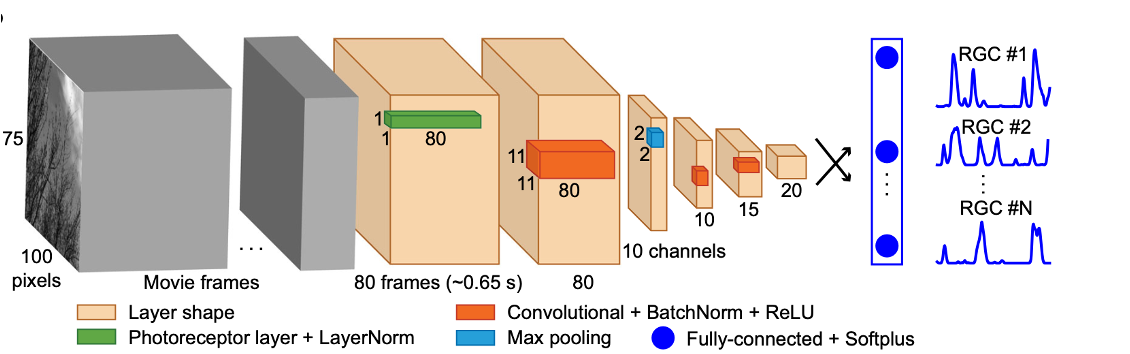
Fazil Onuralp develops machine learning models of retinal activity to better understand neural computations underlying vision. His research focuses on modeling retinal ganglion cell responses to dynamic visual stimuli, with an emphasis on temporal processing, neural dynamics, and context-dependent visual encoding.

Sakin Kirti(he/him)
PhD Student, Bioinformatics IDP
With a background in machine learning, Sakin studies how the retina encodes visual information, using information theory and machine learning to ask why the retina has so many distinct ganglion cell types. He is also interested in comparing computer vision models to the retina, with the goal of using insights from biological vision to build better computer vision systems.
Katheryn Zhou(she/her)
PhD Student
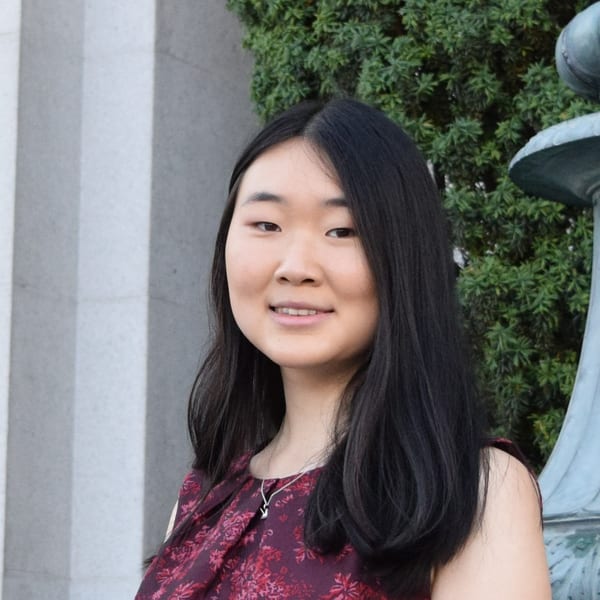
Katheryn studies learning rules within biological and artificial neural networks. She is interested in the intersection between theoretical neuroscience and experimental neuroscience.
Recent Publications
Designing stimuli for non-invasive, cell-type-specific manipulation of retinal ganglion cell activity
Niloufar Ghazavi, Saad Idrees, Vyom Manish Raval, Michael B. Manookin, Fred Rieke, Greg D. Field, Joel Zylberberg
2026
View PublicationFine Granularity Is Critical for Intelligent Neural Network Pruning
Alex Heyman, Joel Zylberberg
Neural Computation (2024)
View PublicationBiophysical neural adaptation mechanisms enable artificial neural networks to capture dynamic retinal computation
Saad Idrees, Michael B. Manookin, Fred Rieke, Greg D. Field, Joel Zylberberg
Nature Communications (2024)
View PublicationStimulus type shapes the topology of cellular functional networks in mouse visual cortex
Disheng Tang, Joel Zylberberg, Xiaoxuan Jia, Hannah Choi
Nature Communications (2024)
View PublicationResponses to Pattern-Violating Visual Stimuli Evolve Differently Over Days in Somata and Distal Apical Dendrites
Colleen J. Gillon, Jason E. Pina, Jérôme A. Lecoq, Ruweida Ahmed, Yazan N. Billeh, Shiella Caldejon, …, Joel Zylberberg, et al.
The Journal of Neuroscience (2024)
View PublicationTowards automated sleep-stage classification for adaptive deep brain stimulation targeting sleep in patients with Parkinson’s disease
Katrina Carver, Karin Saltoun, Elijah Christensen, Aviva Abosch, Joel Zylberberg, John A. Thompson
Communications Engineering (2023)
View PublicationResponses of pyramidal cell somata and apical dendrites in mouse visual cortex over multiple days
Colleen J. Gillon, Jérôme A. Lecoq, Jason E. Pina, Ruweida Ahmed, Yazan N. Billeh, Shiella Caldejon, …, Joel Zylberberg, et al.
Scientific Data (2023)
View PublicationGood decisions require more than information
N. Alex Cayco-Gajic, Joel Zylberberg
Nature Neuroscience (2021)
View PublicationCellular and Synaptic Mechanisms That Differentiate Mitral Cells and Superficial Tufted Cells Into Parallel Output Channels in the Olfactory Bulb
Shelly Jones, Joel Zylberberg, Nathan Schoppa
Frontiers in Cellular Neuroscience (2020)
View PublicationImproved object recognition using neural networks trained to mimic the brain’s statistical properties
Callie Federer, Haoyan Xu, Alona Fyshe, Joel Zylberberg
Neural Networks (2020)
View Publication